
Fast Photoporation Imaging
Dr. Deep Punj
Faculty of Pharmaceutical Sciences, University of Ghent, Belgium
Background
Dr. Deep Punj is part of the scientific staff at the University of Ghent’s Faculty of Pharmaceutical Sciences, supporting a range of research projects centered around cellular drug delivery and therapeutic sciences. As an optical engineer, he designs and maintains optical setups for advanced cellular research. The experimental approach in his group often relies on fluorescence microscopy adapted to specific experiments with advanced optics.
One of Dr. Punj's projects investigates photoporation, a technique that generates nanobubbles in the cell membrane by focusing a laser beam onto the cell surface treated with photothermal nanoparticles. These laser-induced bubbles become temporary pores in the cell membrane offering various possibilities for introducing therapeutic molecules through the membrane into the cell. Dr. Punj further explained, “There are many different types of nanoparticles such as gold nanoparticles, lipid nanoparticles, polydopamine nanoparticles... We use pulsed laser irradiation to generate VNBs [vapor nanobubbles] around melanin-containing melanosomes in melanoma cells, causing mechanical cell damage and inducing ICD [immunogenic cell death].” The process and the detection of the nanobubbles is summed up in Fig.1.
While VNBs can be used to damage specific cell parts, photoporation is a gentle approach, drastically reducing the cell toxicity, while maintaining high precision. Dr. Punj mentions that, “photoporation gives you high throughput compared to other methodologies, our technique leverages photoporation as a potential replacement to electroporation for applications involving transfection or drug delivery."

Figure 1: Pulsed laser irradiation of B16-F10 melanoma cells using endogenous melanin-containing melanosomes as sensitizers for photoporation.
(a) Schematic illustration of the pulsed laser irradiation procedure leading to VNB (vapor nanobubble) formation, B16-F10 cell death and release of danger signals. (b) Comparison of visualization of B16-F10 cells using bright-field microscopy (left panel) and dark-field microscopy (right panel) (scale bar = 100 μm). (c) UV-VIS spectrum of melanin (relative to the maximum extinction) from endogenous melanin-containing melanosomes in B16-F10 cells, with a selected part of the UV-VIS spectrum of endogenous melanin (relative to the maximum extinction) and indicated wavelengths used for pulsed laser irradiation. (d) Detection of VNBs (indicated in yellow) arising around endogenous melanin-containing melanosomes of B16-F10 cells in dark-field microscopy images. Images were taken before and immediately after the laser pulse (during VNB formation) at different laser pulse fluences (0.33 J/cm2, 0.56 J/cm2 and 0.75 J/cm2) (scale bar = 100 μm) using the Prime BSI Express sCMOS camera. Adapted from Ramon et al.
Challenge
Nanobubble formation is a process that occurs with high temporal resolution, imaging these fast phenomena demands a camera that can keep up with the nanosecond laser pulses and deliver high-quality images without compromising speed or usability. The short exposure time limits the photon budget that can be captured in a single frame, requiring a high sensitivity from the camera of choice.
[The Prime BSI Express] is better, faster, more robust and more user-friendly than our previous camera, you don’t have to rake your head around how to install it or get the data out... we are very happy with the camera!
Dr. Deep Punj
Solution
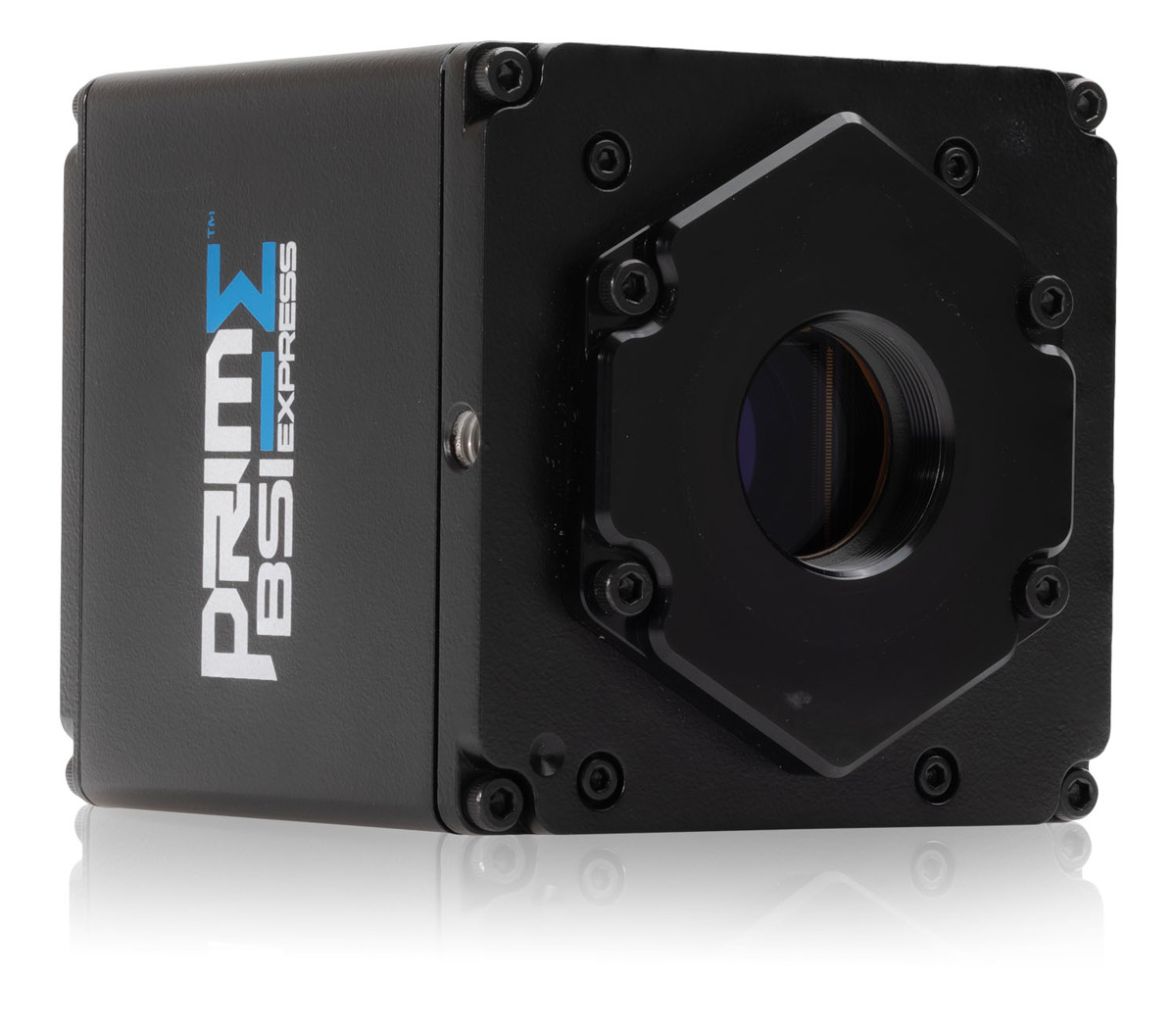
To meet the technical requirements of this experiment, Dr. Punj implemented the Prime BSI Express sCMOS camera in his optical system, controlling the acquisition with MicroManager, and enjoying the benefits of greater image acquisition speeds compared to previous camera solutions, “Earlier we were dealing with around 48 frames per second and now it goes around 100 for the full field of view… we can even crop and get higher speeds. It’s important because nanobubble creations are kind of time sensitive.”
The Prime BSI Express supports both qualitative and quantitative analysis of photoporation effect, without compromising on image quality. With a high sensitivity (read noise of 1 e- and QE of 95%) the Prime BSI Express is an ideal solution for this project, leveraging better imaging options for research on the cellular level. The optical setup contributes through different applications to the development of novel methods for targeted deliveries of molecules ranging from small molecule drugs to therapeutic nucleic acids and proteins.
Reference
1. Ramon, J., et al. (2024), Laser-induced vapor nanobubbles for B16-F10 melanoma cell killing and intracellular delivery of chemotherapeutics, J Control Release 365: 1019–1036. https://doi.org/10.1016/j.jconrel.2023.12.006
Learn More About The Prime BSI Express