
Small animal research is a key translational link between fundamental research and clinical research. Animal models are utilized for essential preclinical in vivo information, such as sample dosage, for many biomedical therapies and devices prior to clinical acceptance.
When conducting preclinical in vivo studies, there are multiple imaging techniques to gather information. Optical imaging detection, over the UV to NIR wavelength range, has been commonly used within medical imaging, with each wavelength having their own advantages and limitations. UV and visible wavelengths can provide soft tissue information but are limited by penetration depth due to the high scattering of these wavelengths within tissue.
Near infrared (NIR) wavelengths are advantageous as they have reduced scattering within biological soft tissue and are thus used for preclinical in vivo studies. NIR can be separated into two distinct windows, with NIR-I encompassing wavelengths in the 750-1060 nm range, and NIR-II encompassing wavelengths in the 1060-1700 nm range. NIR-I wavelengths can be imaged via silicon CCDs but are only able to penetrate a few millimetres into soft tissue. NIR-II can penetrate deeper into tissue, due to reduced light scattering and autofluorescence, but can only be detected by InGaAs cameras. NIR-II methods have recently been developed for small animal imaging to investigate predominately early disease detection. Majority utilize fluorophores, such as single-walled carbon nanotubes and quantum dots, that fluoresce in the NIR-II region.

Recommended Cameras for Small Animal Imaging

PIXIS
High-Performance, Low-Noise CCD Cameras
- Broad range 120–1100 nm
- Lifetime vacuum guarantee
- Low dark current

SOPHIA
Ultra-Low-Noise CCD Cameras
- Ultra-low-noise electronics with 95% QE
- All-metal hermetically sealed vacuum design
- Engineered for dark calibration and exposure control

NIRvana
For low-light NIR and SWIR imaging and spectroscopy
- Designed for both end-user and OEM integration
- Ultra-low cooled cameras
- High sensitivity

PI-MAX 4
Ultrafast, Intensified Cameras
- Ultrashort ≤500 ps gating
- Fast 1 MHz gate opening rate
- Built-in precision timing and delay generator
Resource from the Learning Center
View All
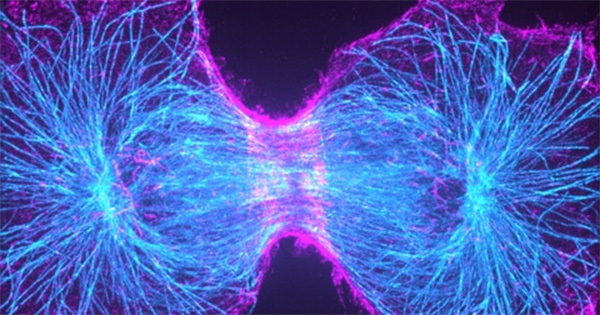

In Vivo Fluorescence Imaging in the NIR-II Spectral Region for Early Cancer Detection
Read the Story
Deep-Cooled InGaAs FPA Camera Enables High-Speed, High-Resolution In Vivo Imaging of SWIR-Emitting Quantum Dots
Read the Story
The Development of Carbon Nanotube Optical Sensors for Early Disease Detection
Read the Story
Scientific InGaAs Cameras For NIR-II Imaging for Drug Discovery/Small-Animal Research
Read the Story