Astronomy with Adaptive Optics
Dr. Jared Males
Steward Observatory, University of Arizona, Tucson, US
Background
Dr. Jared Males is an astronomer who works at the Steward Observatory, studying extrasolar planets, “Extrasolar planets are planets orbiting stars other than our sun, I image them using adaptive optics and coronagraphs. We want to take direct pictures of those planets, split the light from the planet, separate it from the star, and measure the properties of the planet's atmosphere, specifically looking for things like: does it have oxygen, does it have water, does it have methane, how hot is the planet.”
“To do this you need almost perfect images, and because of the way the universe works you can’t make perfect optics. We look at the images we’re getting, figure out what's wrong with them, and fix them in real time at 2,000 times a second using a high-speed camera and a deformable mirror. This corrects high-speed jitter caused by vibrations from telescope motors, the wind and all that stuff.”
“The instrument we’ve built to do this is MagAO-X and we ship it back and forth between our lab at the University of Arizona and the Las Campanas Observatory in Chile, using the Magellan Clay telescope. We mount it on the telescopes and run these optics control loops all night, and image extrasolar planets.”

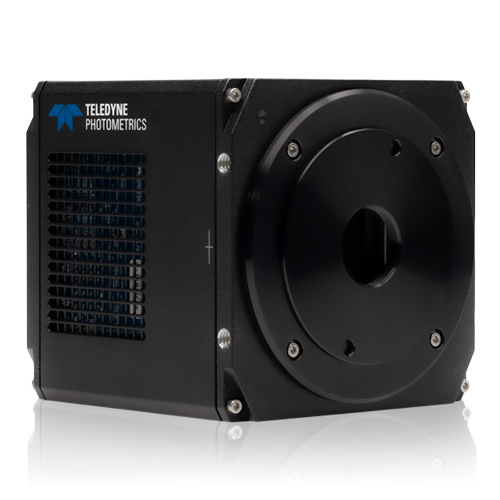
Figure 1: Corongraph vibration control with the Kinetix sCMOS camera. On the left is the raw footage from a coronagraph, showing considerable drift and vibration. On the right is the footage from a coronagraph corrected by a Kinetix imaging at 5.3 kHz, displaying increased stability and a lower RMS. Footage from the MagAO-X telescope.
Challenge
Dr. Males commented on the challenges he encounters with his application, “For ground-based astronomy with telescopes our very first challenge to overcome is atmospheric turbulence. This is the same phenomenon that causes stars to twinkle, and unfortunately that twinkling means that the images of those stars are very bad, if you don’t deal with the twinkling, you just get a blob. We also get the wind blowing and vibrations fromtelescope motors.
“To correct this, we need high-speed cameras that can image the light rejected by ourcoronagraphs and correct the vibrations faster than they can occur as a wavefront sensing camera.”
“We’re imaging objects with separations of 0.1 arc seconds, where a human hair held at arm’s length is a couple of arc seconds across. To image objects at these close separations with high-contrast is super hard, and we need cutting edge, best performance equipment in our system to push the envelope and image these faint signals.”
Our Kinetix cameras run really fast and make a super dramatic difference to vibrations in our system, they work well and reliably.
Dr. Jared Males
Solution
The Kinetix is the ideal solution, capable of imaging at very high speeds across a large sensor, all with high sensitivity thanks to low noise and high quantum efficiency.
Dr. Males described his experience with his Kinetix cameras, “We have two Kinetix, both look at the coronagraph, one at the focal plane and one at the pupil plane using rejected starlight, so we can be flexible with coronagraph optical design. We also have two ProEMs from Teledyne Princeton Instruments as dual imagers that we run at different wavelengths.”
“We use the Kinetix cameras primarily as wavefront sensing cameras, so they image really fast and we're mainly using them to control vibrations. If we do a side-by-side comparison with the Kinetix control loop on and off, it makes a dramatic difference to vibrations in our system, the airy pattern goes from dancing around to very stable. It looks like a simulation.”
“We mainly use the dynamic range mode on the Kinetix. While we are focused on speed, we use a small region of interest on the Kinetix for speed on correction, but we can also use the big FOV of the uncropped sensors to find the star we’re correcting for.”
“Setting up the Kinetix on our systems has gone really well, we like the very high speed PCIe interface on it, so we get fantastically low latency coming off the camera. We run our own custom hardware and software, and we got great help from software engineers at Teledyne Photometrics to make the subtle tweaks and get it to work well and reliably. We don’t have software issues or anything like that.”